
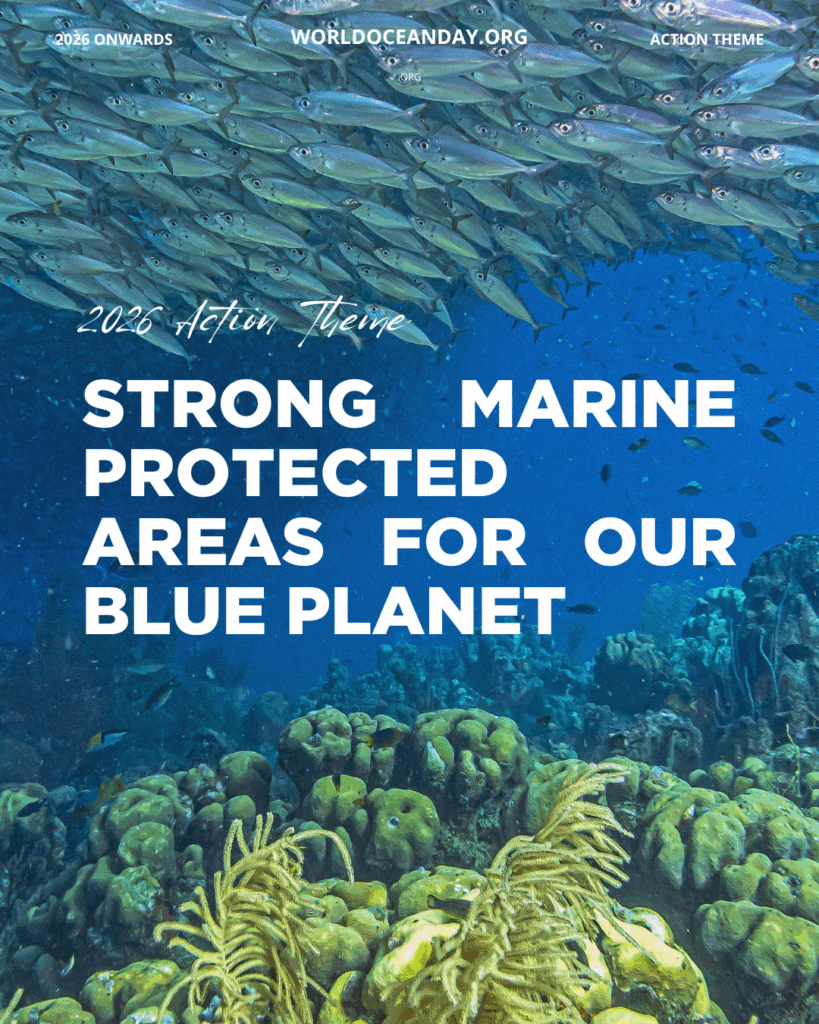
Today marks the United Nations' World Oceans Day. The global organizing body, World Ocean Day, has officially announced this year’s global action theme as "Strong Marine Protected Areas for Our Blue Planet." This theme emphasizes that with the international High Seas Treaty (BBNJ Agreement) taking effect, nations must fulfill their "30x30" commitment—protecting at least 30% of the world's ocean by 2030. However, domestic scholars in Taiwan have issued a timely warning that Taiwan’s current marine conservation faces an emptying crisis of becoming mere "paper parks," underscoring an urgent need to align with international action.
Chen Tai-an, an associate professor at the General Education Center of Cardinal Tien Junior College of Healthcare and Management, noted in a media commentary today that the UN has advocated for "reimagining our relationship with the ocean." Meanwhile, internationally, Japan and the Philippines are entering negotiations regarding Exclusive Economic Zones (EEZs) that touch upon the waters off Taiwan’s eastern coast. As a maritime nation facing shifts in regional geopolitics and global collective efforts to protect the high seas, Taiwan can no longer limit itself to verbal sovereignty disputes. Instead, it must elevate its international standing through the implementation of tangible marine guardianship.
International Focus on "Strong MPAs" Highlights Taiwan's Enforcement Gap
According to World Ocean Day organizers, the core of this year's action lies in urging world leaders to deliver on their promises by establishing "Strong Marine Protected Areas (MPAs)" that possess genuine ecological resilience and can safeguard against overfishing and pollution across borders.
Contrasting this with international standards, Chen pointed directly to the vulnerabilities in Taiwan's current situation. Although Taiwan has progressively advanced the legalization of marine conservation, practical efforts remain hindered by long-standing issues. These include conflicts over fishing rights, reluctance from local governments, and a severe shortage of frontline maritime enforcement capacity, leaving most designated protected areas without consistent management. This phenomenon of "enforcement failing to keep pace with legislation, and conservation failing to keep pace with harvesting" effectively reduces Taiwan's marine ecosystems to defenseless "paper parks."
Fulfilling the Blue Obligation: Experts Propose Two Major Transformation Strategies
To echo the dual global call for "reimagining" and "strong protection," experts suggest that Taiwan should immediately initiate a strategic transformation:
-
From "Seafood Culture" to "Blue Citizenship Education": Completely overhaul the utilitarian mindset of the past, which viewed the ocean merely through the lens of "seafood and accessible tourism." Instead, marine education should be deepened into a universal "blue obligation" for all citizens, fostering a sense of a shared destiny between the public and the ocean.
-
Proactively Establish Science-Based Protected Areas: Taiwan should take the initiative in key sensitive waters, such as those off the eastern coast, by proposing marine ecological protection plans backed by scientific evidence. Furthermore, it should lead by introducing and integrating international top-tier standards for cross-border fisheries and ecological management systems.
Chen emphasized that the World Ocean Day declaration for "Strong MPAs" serves as a mirror. In the face of climate change, Taiwan must shift its mindset. It needs to transition from an island that only "extracts resources" from the sea to a genuine guardian willing to "contribute and enforce" for the ocean, thereby fulfilling Taiwan's blue obligation on the international stage through concrete actions.
Resources: https://udn.com/news/story/7339/9551813
Disclaimer:
1.The articles compiled and published by this association on the Taiwan Net Zero Emissions Association's official website and in the Member Biweekly Report are for the purpose of introducing international environmental trends and for educational use only, not for profit.
2.Any legal responsibilities or losses resulting from the use or adaptation of articles translated by the association shall be borne solely by the user or adapter.
For more insights on net-zero emissions, feel free to subscribe to our biweekly newsletter:
https://www.tnzea.org.tw/eforms.php?lang=tw&tb=1