

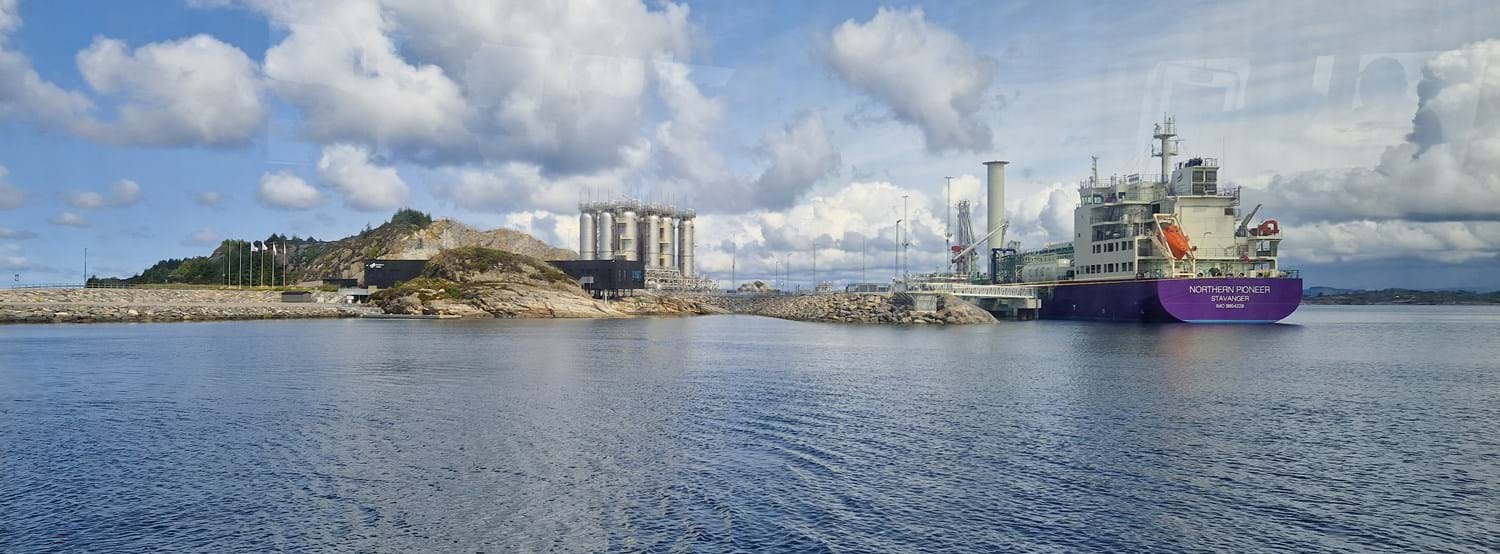
Enova, Norway’s state-owned agency for energy transition, announced on May 27, 2026, an allocation of NOK 700 million to accelerate the development of the nation's Carbon Capture, Utilisation, and Storage (CCUS) industry. As major infrastructure projects like the "Northern Lights" transition into their operational phases, the Norwegian Government and the GCE Ocean Technology cluster are shifting their policy focus from singular flagship projects toward mobilizing small and medium-sized enterprises (SMEs) to construct a comprehensive, commercialized CO2 value chain.
▍ Core Policy and Funding Targets
-
NOK 700 Million Transition Catalyst: Enova’s expanded funding aims to lower the financial entry barriers for SMEs entering the carbon reduction market, thereby accelerating industrial decarbonization.
-
From Infrastructure to Mass Mobilization: With large-scale storage facilities like Northern Lights now ready, Norway’s CCUS industry enters its second phase—actively engaging suppliers and tech firms across the entire value chain to turn carbon management into a profitable ecosystem.
-
Fostering Cross-Sector Tech Collaboration: The funding targets seven critical engineering and service domains to give Norwegian companies a competitive edge:
-
CO2 capture technologies
-
Maritime transport and logistics
-
Monitoring and sensor systems
-
Subsea solutions
-
Digitalisation and automation
-
Infrastructure and storage solutions
-
Engineering and operational services
-
▍ Implementation Mechanisms and Competence Building
-
Bridging Industry, R&D, and Public Stakeholders: GCE Ocean Technology’s CCUS Resource Group is actively connecting local firms with diverse funding streams, including Enova, CLIMIT, Innovation Norway, and Horizon Europe.
-
Launching Dedicated CCUS Competence Courses: To bridge the knowledge gap during this transition, the cluster is developing a tailored CCUS course for businesses. The curriculum will cover the entire $\text{CO}_2$ value chain, regulatory frameworks, business models, and practical implementations.
-
Leveraging Industrial Lineage: The report highlights that Western Norway is uniquely positioned for this shift due to its deeply rooted expertise in maritime operations, subsea tech, offshore energy, and logistics, allowing traditional heavy industries to seamlessly pivot to green carbon management.
▍ Market Perspectives and Potential Challenges
-
Proponents' View: Industry players generally agree that this capital injection effectively mitigates financial risks for startups and smaller suppliers developing decarbonization equipment, preventing market monopolization by energy giants and speeding up the commercialization of Norwegian green tech.
-
Critics' View: Energy analysts emphasize that CCUS remains a long value chain heavily reliant on economies of scale and cross-border regulatory integration. While funding helps R&D, the absence of a long-term, self-sustaining revenue model (backed by robust carbon pricing or trading systems) means whether smaller suppliers can survive without ongoing state aid remains to be seen.
Image/Source: https://www.gceocean.no/news/posts/2026/may/enova-allocates-nok-700-million-to-accelerate-norway-s-ccus-industry/
Disclaimer:
-
Articles translated and published by the Taiwan Net Zero Emissions Association on its official website and in the Members’ Biweekly Newsletter are intended solely to introduce international environmental trends and for educational purposes, and are not used for commercial gain.
-
Any legal liability or loss arising from the use or adaptation of the Association’s translated articles shall be borne solely by the user or adapter.