

New Study in Nature Sub-journal: Is Direct Air Capture (DAC) Less Effective Than Expected? Investing in Renewable Energy Better Balances Carbon Reduction and Health
Direct Air Capture (DAC) technology has been viewed in recent years as a crucial supplementary tool for rapidly reducing greenhouse gases. However, its high energy consumption and costs have sparked significant debate. A recent study published in Communications Sustainability, a journal under the Nature portfolio, further incorporates "public health" into its assessment, exploring the difference in "opportunity cost" between investing funds in DAC versus renewable energy.
🌬️ Renewable Energy Wins on Dual "Carbon Reduction and Health" Benefits
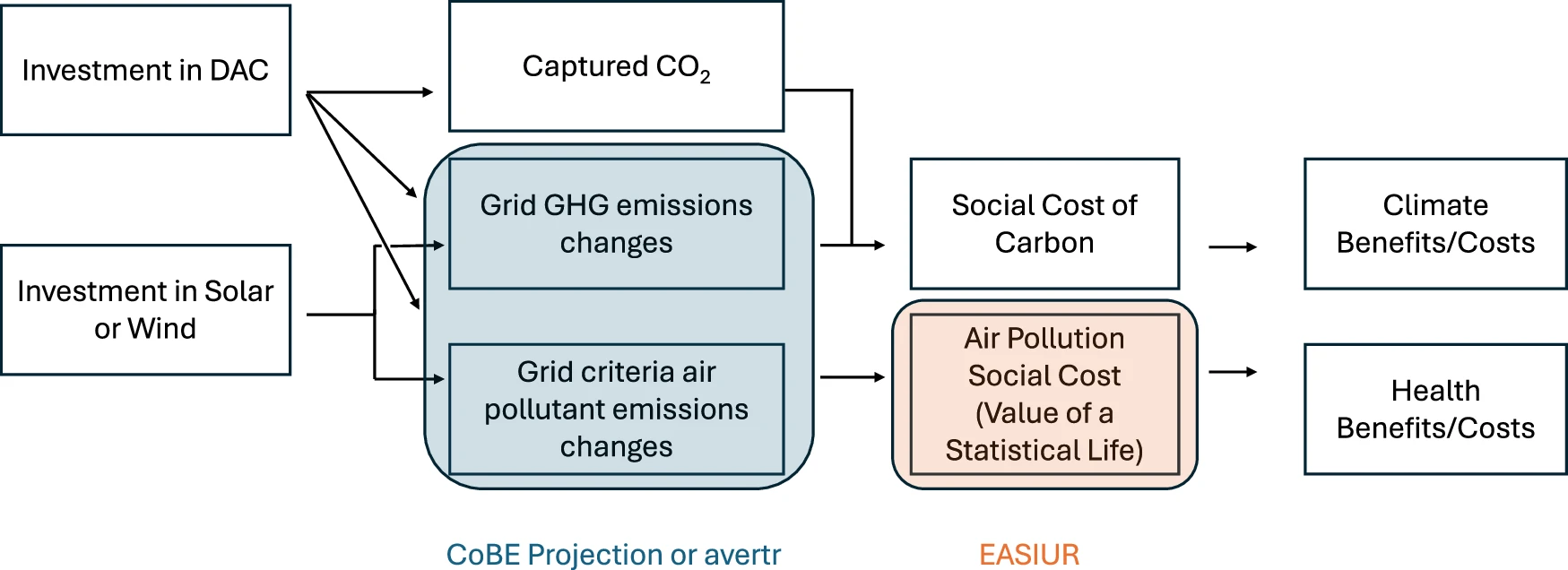
The research team conducted model analyses across 22 grid regions in the United States, comparing the benefits of allocating the same capital to DAC facilities versus utility-scale wind and solar energy. The results show that in the vast majority of scenarios and regions, the "combined climate and public health benefits" of deploying renewable energy far outweigh those of building DAC. This is because renewable energy directly replaces fossil fuels, which not only reduces greenhouse gases but also significantly lowers air pollution. In contrast, while DAC captures CO2, its high energy demand can actually increase air pollution and the health burden on communities near power plants if it relies on fossil-fuel-generated electricity—especially since DAC technology itself lacks a mechanism to reduce air pollutants.
💡 Breakthrough Technology is Key to DAC Cost-Effectiveness
The study indicates that unless DAC technology achieves "breakthrough" progress in the future—such as drastically reducing carbon capture costs to $100 per ton with extremely high energy efficiency—investing in renewable energy remains the more cost-effective climate mitigation strategy. The research even found that if DAC technology development stagnates, the greenhouse gas emissions and air pollution health risks caused by grid-connected DAC could even exceed the benefits of its carbon sequestration.
🛡️ Net-Zero Strategies Should Be Guided by "Opportunity Cost"
This study reminds policymakers that when evaluating decarbonization technologies, looking solely at "net carbon removal" is insufficient. They must comprehensively consider the opportunity cost of capital allocation and the health impacts on society. Experts suggest that at this stage, before global power grids have been significantly decarbonized, priority should be given to strategies that reduce greenhouse gas emissions at the source (such as building renewable energy). Large-scale deployment of DAC to clean up residual emissions should only follow once the potential for source reduction has been fully realized—a more pragmatic path toward sustainability.
Image/Source: https://www.nature.com/articles/s44458-026-00068-0
Disclaimer:
-
Articles translated and published by the Taiwan Net Zero Emissions Association on its official website and in the Members’ Biweekly Newsletter are intended solely to introduce international environmental trends and for educational purposes, and are not used for commercial gain.
-
Any legal liability or loss arising from the use or adaptation of the Association’s translated articles shall be borne solely by the user or adapter.