
Gathering Industry Perspectives: Driving Momentum for Net-Zero Transition Strategies
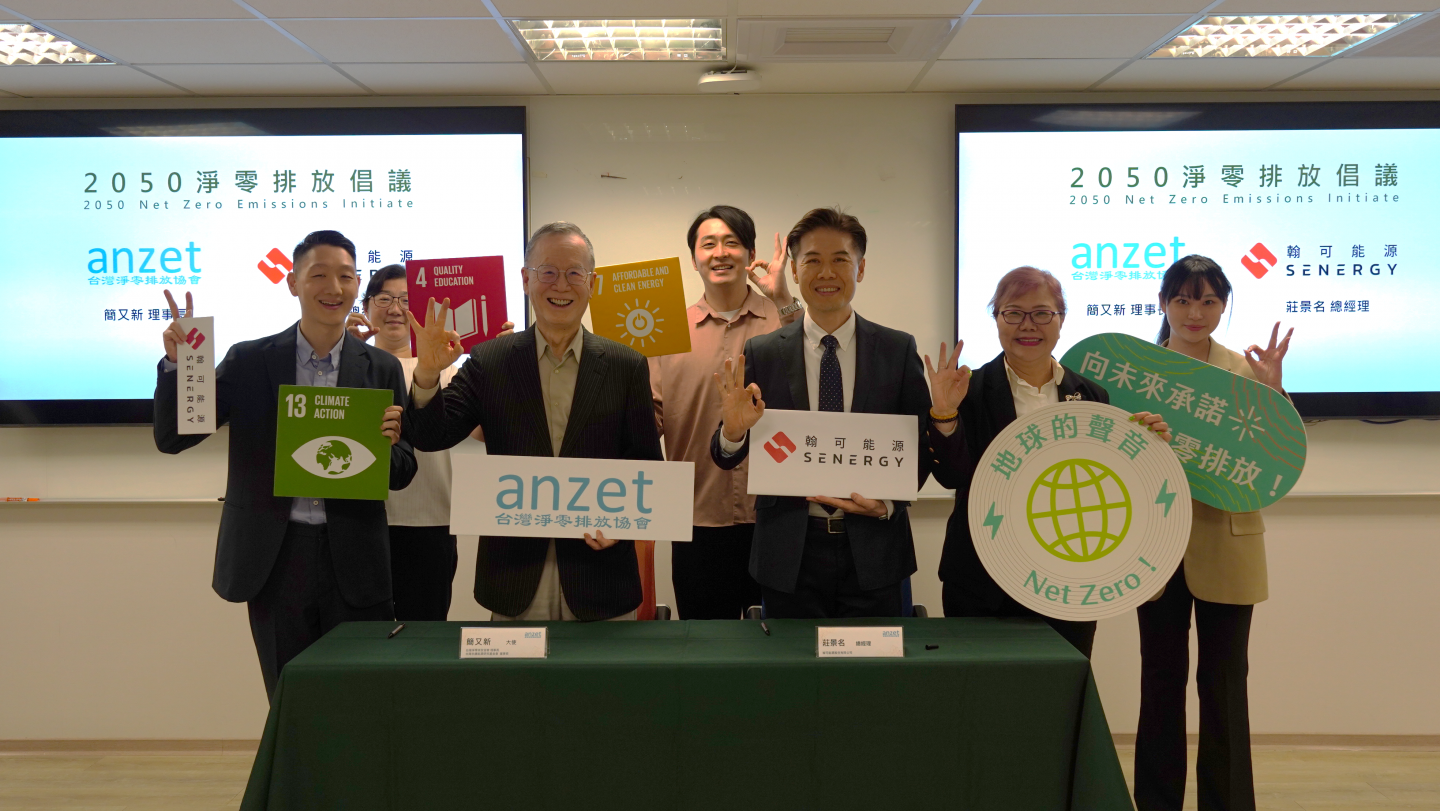
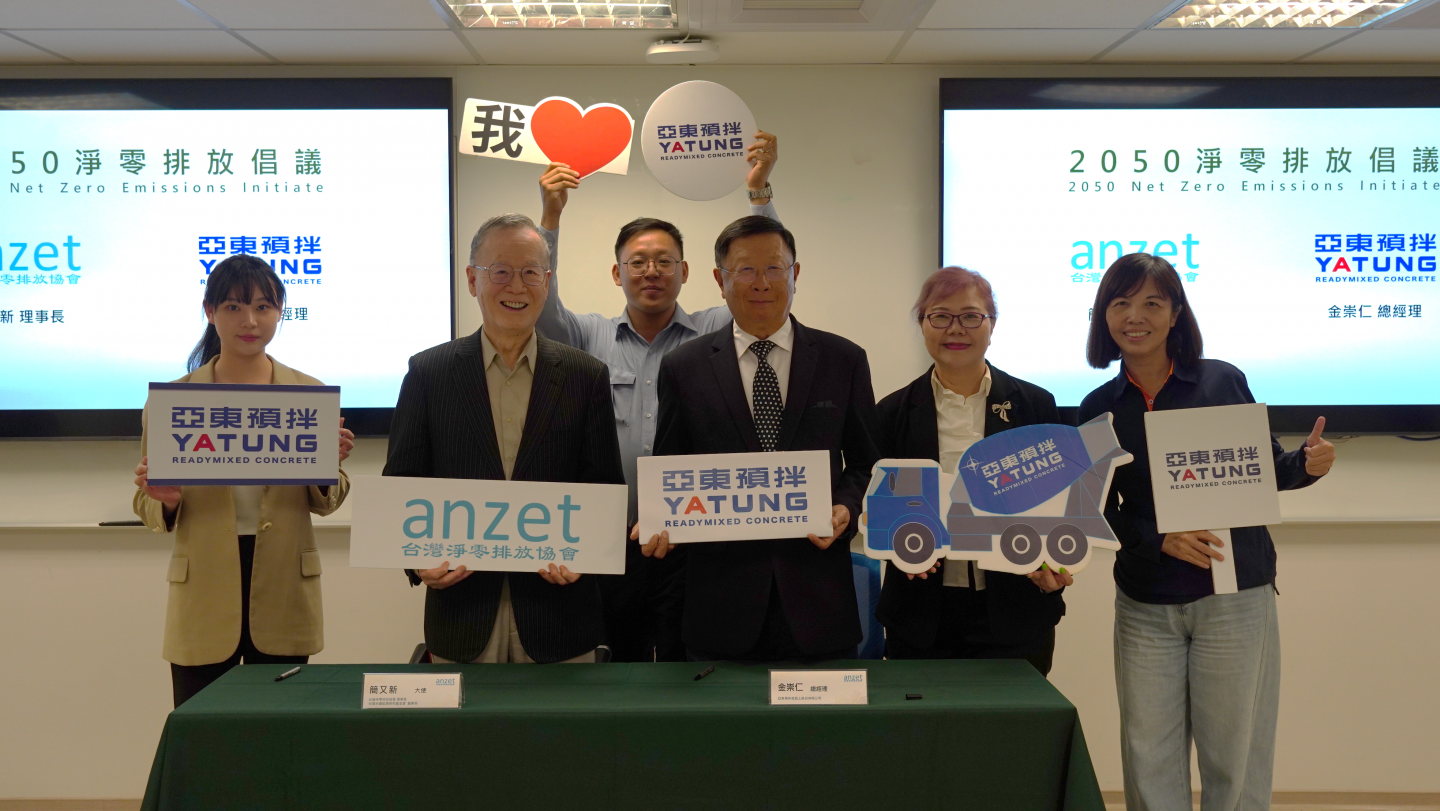
The Taiwan Net Zero Emissions Association convened the "13th Net-Zero Transition Consultative Group Meeting" on May 4, 2026, chaired by Chairman Ambassador Eugene Chien. The meeting brought together industry representatives and experts from the semiconductor, energy, cement, telecommunications, and consulting sectors. Participants engaged in in-depth exchanges on key issues such as corporate net-zero transition practices, energy policy gaps, and resource circulation challenges, continuing the platform's vital role in "gathering industry perspectives and transforming them into policy momentum." Simultaneously, a signing ceremony for the 2050 Net-Zero Emissions Initiative was held for Asia Ya Tung Ready Mixed Concrete Co., Ltd. and NHH (New Green Power), marking their official induction as members of the association.
In his opening remarks, Ambassador Chien pointed out that Taiwan's current overall economic performance is outstanding, demonstrating strong momentum in economic growth, capital markets, and industrial competitiveness. However, amid accelerating shifts in the global political-economic landscape and climate change, he noted, "Taiwan is at its best moment, with people living in peace and prosperity; yet, such stable times are often when we must remain most vigilant." He emphasized that historical experience shows that failing to plan for transition early enough could lead to losing advantages in the next wave of industrial restructuring. Therefore, now is the critical window for Taiwan to integrate resources and proactively respond to net-zero trends. Citing Europe's development as an example, Ambassador Chien noted that a lack of synchronization between policy and industry would affect long-term competitiveness, highlighting the importance of establishing a dialogue mechanism between the two. He also stated that as the semiconductor industry continues to expand, future energy demand and carbon emission pressures will rise significantly; companies must shoulder the responsibility of leading society toward a net-zero transition while pursuing growth.
The meeting featured a keynote speech by Ms. Huei-Hsin Tseng, Deputy Director of the Green Manufacturing Department at Taiwan Semiconductor Manufacturing Company (TSMC). Titled "TSMC Green Manufacturing," the presentation shared practical pathways for corporate net-zero transition. The content covered the Net Zero Roadmap, process emission reduction technologies, energy efficiency improvements, the adoption of renewable energy, "Water Positive" initiatives, the circular economy, and sustainable environmental management, demonstrating a systematic approach to driving low-carbon transition under the pressure of global supply chains.
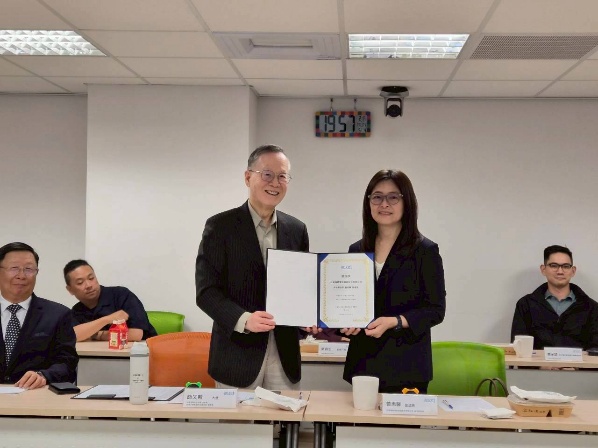
During the Net-Zero Transition Consultative Committee Q&A session, participating members offered several specific observations and recommendations of policy value based on industrial practice. First, regarding water resource management, the "Water Positive" concept garnered significant interest; participants raised in-depth questions about water sources and recharge mechanisms, reflecting the high priority industries place on sustainable water management standards. Second, in the field of resource circulation, the massive scale of by-products such as waste sulfuric acid generated by the semiconductor industry is beginning to exceed market capacity. This indicates that even with advanced recycling technologies, robust institutional frameworks and market mechanisms are still required to prevent industrial bottlenecks.
On energy transition issues, committee members noted that while the corporate sector has proactively planned for hydrogen energy and Carbon Capture and Storage (CCS) technologies, gaps in pace and pathway remain between corporate strategies and current national energy policies. For instance, domestic efforts still focus on hydrogen-blended gas and ammonia-blended coal as transitional solutions, while CCS remains mostly in the demonstration or early planning stages, highlighting the need for further alignment between policy and industry.
Furthermore, cross-industry collaboration emerged as a key discussion point. Cement operators suggested that they could assist high-emission industries in reducing carbon by incorporating process sludge into cement kilns and developing alternative materials and carbon sequestration technologies. Energy providers suggested combining natural gas power generation with carbon capture technology to establish a scalable low-carbon power supply model, providing industries with stable and affordable decarbonization solutions.
In his closing remarks, Ambassador Eugene Chien stated that the association possesses policy communication and advocacy functions. By regularly consolidating industrial feedback, it can provide timely input to government decision-makers to ensure policy formulation aligns more closely with practical industrial needs. Facing the long-term challenge of net-zero transition, it is only through continuous dialogue and collective action among industry, government, and academia that a social consensus can be formed to drive institutional innovation and implementation.
Reviewing previous meetings, the 10th session featured Ron Horng, Vice President and Chief Environmental Officer of Foxconn Technology Group, who shared "Practical Experience in Driving Corporate Net-Zero Transition." He explained how the group set Science Based Targets (SBT) following a 1.5°C pathway and pushed for decarbonization through renewable energy adoption, process improvements, and supply chain collaboration. Simultaneously, Foxconn has actively developed natural carbon sinks and biodiversity initiatives—establishing diverse carbon sink mechanisms across forests, oceans, and community ecosystems—while employing a "leading by example" model to drive supply chain transition, demonstrating the pivotal influence of large enterprises in global industrial chains.
Last month, Peter Pu, Strategic Advisor to the President of BSI (British Standards Institution), was invited to analyze "Key Requirements of International Clients for Suppliers under Net-Zero Trends." He pointed out that Scope 3 carbon accounting, Science Based Targets (SBTi), renewable energy procurement (RE100), the Carbon Border Adjustment Mechanism (CBAM), and product carbon footprint disclosure have become basic thresholds for global supply chains. The meeting also emphasized that 2025 to 2026 is a critical period for supply chain transition; companies that fail to establish carbon management capabilities in time may face market elimination, indicating that net-zero has evolved from a voluntary corporate action into a competitive necessity.
In the future, the association will continue to utilize the consultative group mechanism to deepen industrial dialogue and accumulate policy recommendations. By playing a bridging role in key issues, it aims to help Taiwan seize opportunities and achieve a steady transition in the global net-zero landscape.