

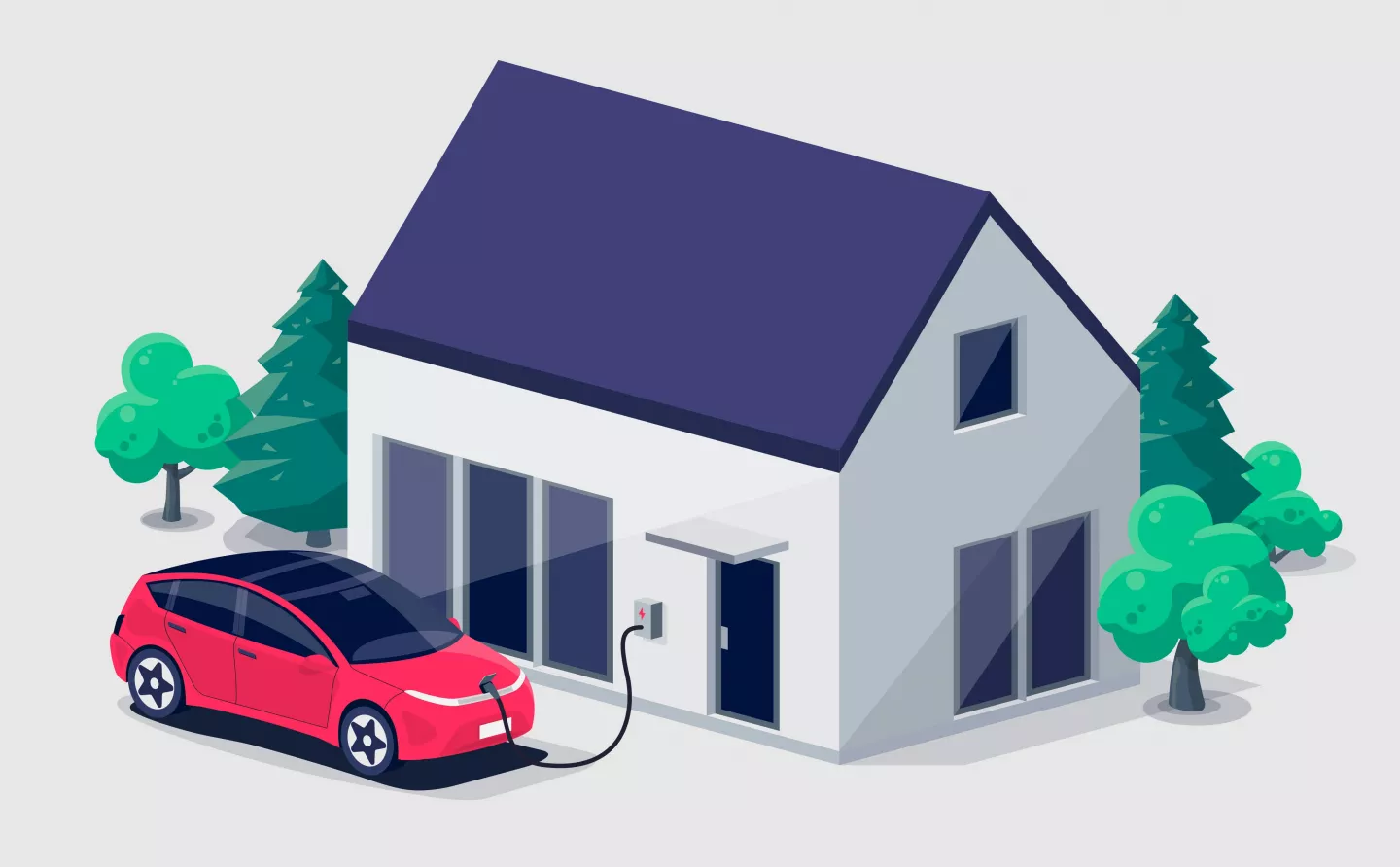
This simulation study, which analyzed over 6,000 electric vehicles across 432 regions in the United States, reveals that adopting a V2H (Vehicle-to-Home) strategy can generate staggering dual benefits for both the environment and the economy. By leveraging EV batteries to charge during periods of low electricity prices and low carbon intensity, and subsequently discharging power to the home during high-price, high-emission peak hours, owners can optimize their energy footprint.
1. Economic Benefits: 40%–90% Reduction in Charging Costs
Compared to the standard "uncontrolled charging" (plug-and-charge) model, V2H utilizes intelligent scheduling (energy arbitrage) to slash a vehicle's lifecycle charging costs by 40% to 90%. In regions with high electricity price volatility—such as California and Texas—the savings generated through V2H can even completely offset the cost of charging, effectively enabling "zero-cost" driving.
2. Environmental Benefits: Emission Reductions of Up to 250% (Net-Negative Emissions)
The most staggering finding of the study lies in its decarbonization potential. By optimizing household energy consumption, V2H can reduce a home's lifecycle greenhouse gas (GHG) emissions by 70% to 250%.
The Significance of the Data: In regions covering 60% of the U.S. population, the reduction in household carbon emissions achieved through V2H actually exceeds the emissions generated by the EV's own charging (>100% offset). This implies that, for the power grid, these electric vehicles effectively achieve a "Net-Negative" carbon impact.
3. Policy Recommendations and Challenges
Despite its immense potential, large-scale adoption still faces three major hurdles:
Transparency: Owners are concerned that frequent charging and discharging may damage the battery; manufacturers must provide transparent data on battery degradation.
Infrastructure: Building codes need to be updated, and technical personnel must be trained to install V2H bidirectional charging stations.
Grid Integration: Utilities (such as Taipower) need to redesign rate structures and incorporate V2H into grid regulation and planning.
This study provides strong evidence for "Distributed Energy Resources (DER)." In the future, the value of electric vehicles will no longer be limited to mobility; they will become "Virtual Power Plants (VPP)" for every household. For companies pursuing Net-Zero, electrifying corporate fleets and integrating V2H/V2G technology will be a high-ROI strategy to reduce Scope 2 emissions.
圖片來源: © Peter Varga Petovdesign
資料來源: https://www.nature.com/articles/s41560-025-01899-2
免責聲明:
1、本協會編譯、刊載於台灣淨零排放協會官網及〈會員雙週報〉電子報之文章本於引介國際環保趨勢及教育目的,不為營利使用。
2、任何一切因使用、改編本協會編譯之文章而招致之法律責任或損失,由使用、改編者自行承擔。